A year ago, "vibe coding" was a tweet. Today it is how a growing share of software gets built. The term, coined by Andrej Karpathy in early 2025, described a simple shift: instead of writing every line yourself, you describe what you want in plain language and let an AI model generate the code. In 2026 that idea has hardened into a real workflow. More than three quarters of developers are already using or planning to use AI coding tools, and a wave of products (Cursor, Claude Code, Lovable, Bolt, Replit, and more) has made it possible for both engineers and non-engineers to go from an idea to a working app in an afternoon.
The long tail of apps that never get built #
General-purpose dashboards are designed for the common case. They have to be. A product used by thousands of teams cannot ship a button for every niche workflow, or it would collapse under its own complexity. So the genuinely specific ideas, the ones that matter to exactly one team, usually never get built.
Think about the requests that are too narrow for any roadmap. A weekly report that blends mentions of three competitors with your own and emails the delta to a Slack channel. An internal tool that flags when a specific creator goes live and pages the on-call analyst. A one-off study that pulls every mention of a hashtag across platforms, scores the sentiment, and dumps it into a spreadsheet for a researcher. Each is trivial to describe and, until recently, expensive to build.
Vibe coding collapses that cost. The bottleneck is no longer "can I write this app." It is "can my AI tool reach the data and actions it needs."
Why APIs are the missing half of vibe coding #
An AI coding agent is brilliant at generating code and almost useless without something to call. Models do not have your data, and they cannot act on the world on their own. APIs are the bridge between an agent's intent and real systems: they let generated code fetch live information and take actions, instead of producing a pretty mockup with fake data.
This is why the conversation in 2026 has moved from prompts to agent experience. The single most useful thing an API can offer a coding agent is a complete, machine-readable description of itself. Point a modern AI tool at an OpenAPI specification and it can scaffold a working client, infer the right endpoints, and wire up authentication, often on the first try. A good spec has quietly become part of the definition of done for any serious API.
The practical takeaway is simple. If the data you need lives behind an API with clean docs and an OpenAPI spec, you can vibecode against it. If it does not, you are stuck copy and pasting from a dashboard.
Social listening, now programmable #
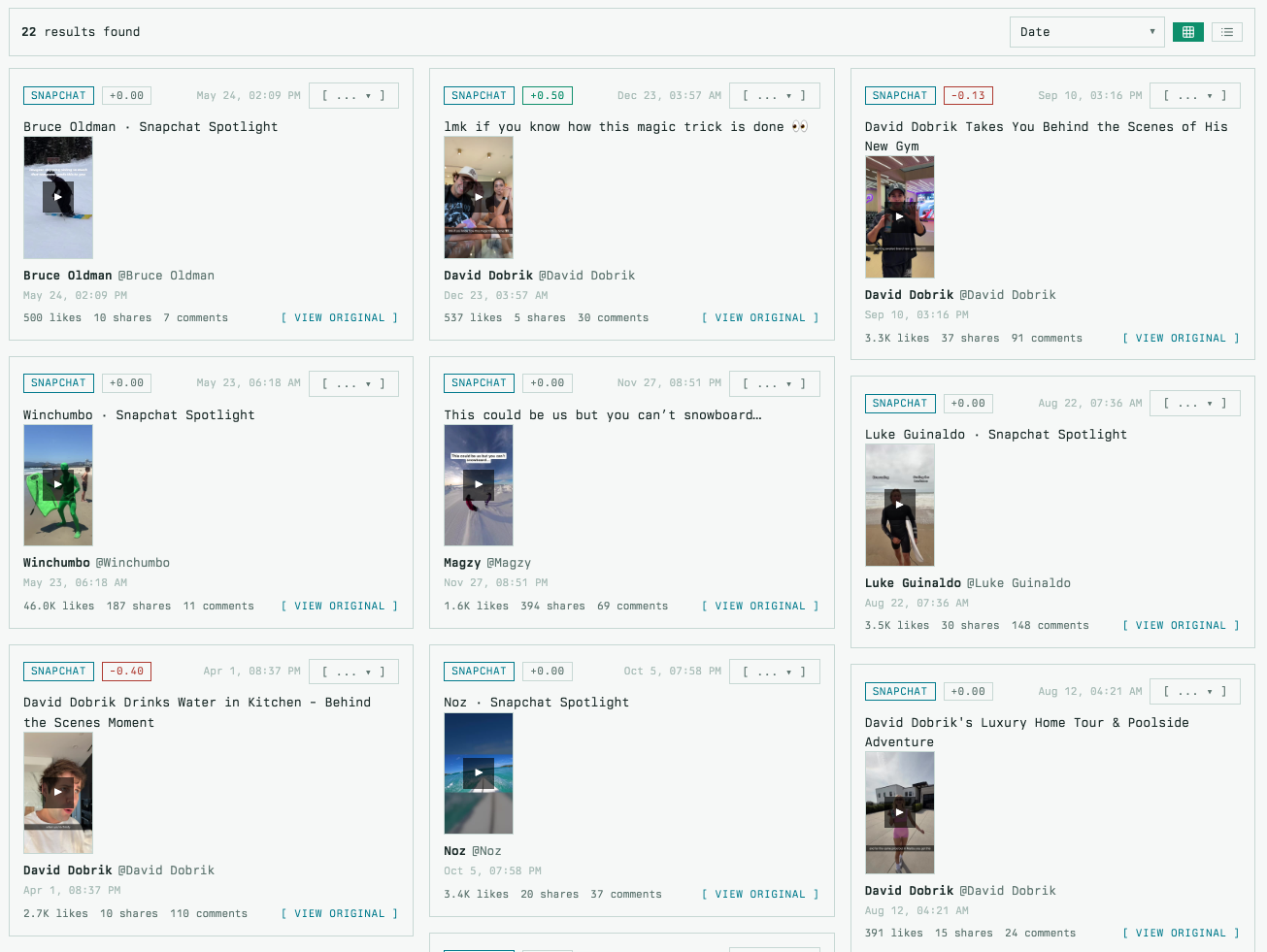
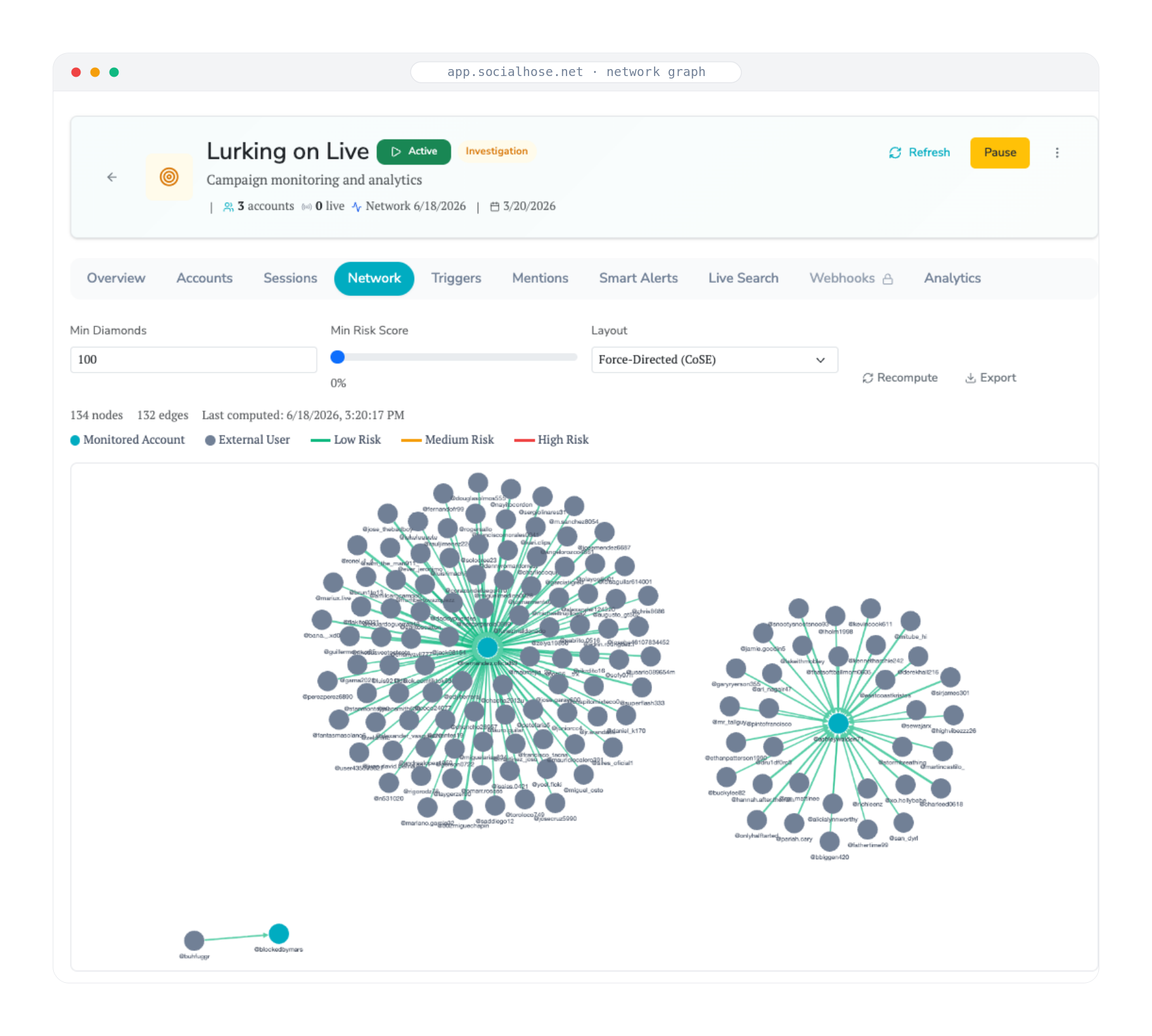
This is exactly the gap the Socialhose Public API closes. Everything you monitor inside Socialhose is now available to your own code and to your AI coding tool of choice. You bring the niche idea; the API brings the data and the actions.
With it you can:
Read mentions enriched by our AI, including sentiment, emotions, intent, and named entities, with filtering by platform, date, keyword, and more.
Create and manage campaigns and live searches across Facebook, Instagram, TikTok, X, LinkedIn, and Reddit.
Monitor accounts on TikTok Live and download stream recordings on demand.
It is built for real use, not just experiments. Access is controlled with organization-scoped API keys, so you can hand a read-only key to a reporting script and a separate key with write access to a tool that provisions searches. Every endpoint is documented with a full OpenAPI 3.1 specification, which is the part your AI tool actually wants.
From idea to app in one sitting #
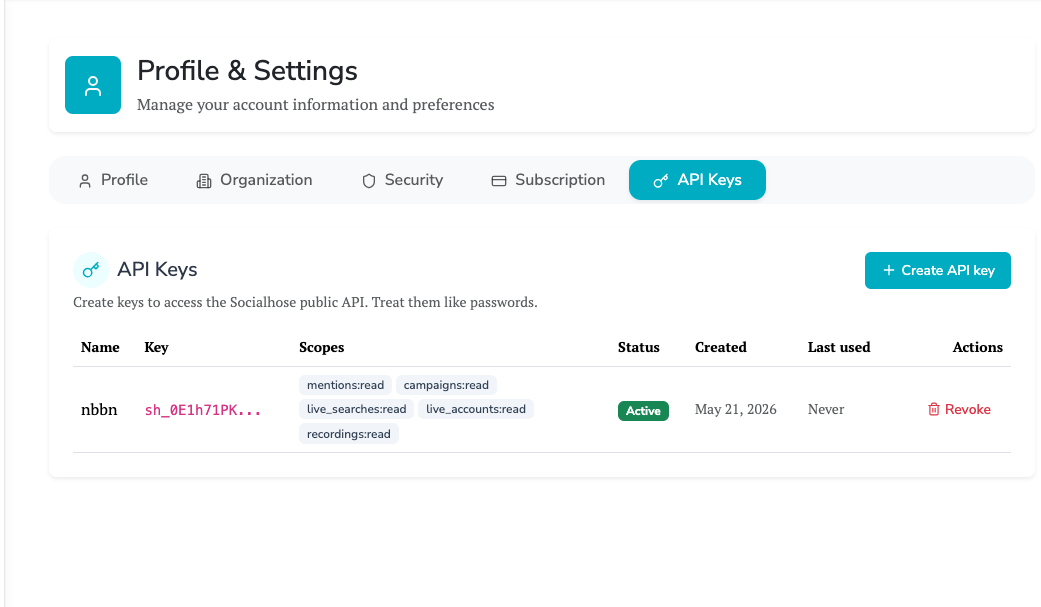
The workflow looks like this. Generate an API key under your profile settings. Open your AI coding tool and point it at the Socialhose OpenAPI spec. Then describe the thing you have always wanted but never had time to build.
"Build me a small web app that pulls this week's negative mentions for my brand across all platforms, groups them by topic, and posts a summary to Slack every Monday morning." That used to be a sprint. Now it is a prompt, a spec, and a key.
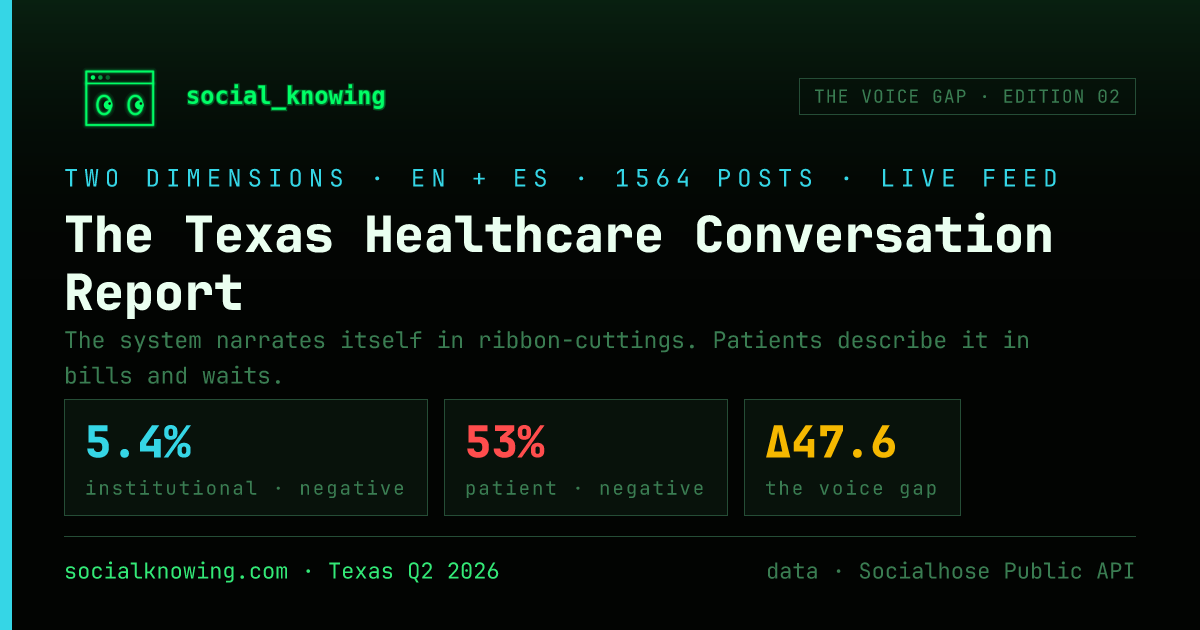
A few starting points worth stealing: a daily competitor sentiment digest, a live alert that fires when a watched account starts broadcasting, a research notebook that exports enriched mentions for a specific campaign, or an internal dashboard tuned to the exact metrics your team argues about.
Build the niche tool only you need #
The most interesting software of the next few years will not come from roadmaps. It will come from individuals and small teams building the precise tool that solves their one problem, because the cost of doing so has fallen to almost nothing. Social data should be part of that wave.
Grab a key, read the docs, and build the thing that was always too specific to ask for.